By Tomasz Palacz, CEO and CTO at Liftero
Tomorrow, Liftero becomes a publicly traded company.
When we started Liftero, neither I nor my co-founder, Przemysław, came from the traditional space industry. At that point, we had neither formal, space-specific education nor prior experience working in the professional space sector. I do have a PhD in space propulsion, but it was done at AGH University in Kraków, which at the time did not have an aerospace technology faculty. In practice, much of my work was possible only because of the capabilities we were building ourselves at Liftero.
So although we were both engineers, we were outsiders to the space industry.
For a long time, I considered that one of our biggest weaknesses. We could not put any fancy logos next to our names in the pitch deck. We did not have the kind of background that immediately gives credibility in front of investors, customers, or partners.
Today, I see it differently. Being outsiders forced us to reason from first principles. Not because it sounded good in a startup pitch, but because, without prior industry experience, that was often what we were left with as engineers.
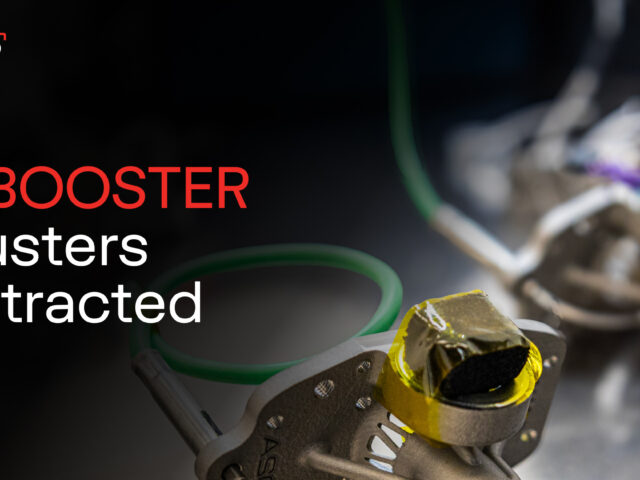
This way of thinking shaped Liftero. It shaped our operating principles. It shaped the way we built BOOSTER. And I believe it is one of the reasons why our approach to satellite propulsion stands out.
Space propulsion itself is not a new concept.
It has been a basic spacecraft subsystem since the beginning of space exploration. For that reason, it has often been seen as a less attractive investment area. It is not a completely new niche where a company can build its position as the first mover. It is not the type of story that venture capital investors often like most.
There is some truth in that view. The physics of propulsion cannot be bent endlessly, and in many cases innovation is more incremental than revolutionary.
But I think this view misses the much bigger point.
Propulsion is the only way to move around in space. It is the mobility layer of the space economy. Our job is not to create a new market. Our job is to build a critical layer for a market that is already growing, and to grow with it.
Railroads were the transport layer for industrial economies. Fiber cables became the transport layer for data. Data centers became the infrastructure layer for cloud and AI. In space, propulsion is the mobility layer.
And the timing matters.
The number of satellites is growing exponentially, at a pace the industry has never seen before.
Even if we exclude the largest megaconstellations, more companies, institutions, and countries are building spacecraft and constellations. Many of these satellites are concentrated in narrow orbital bands, which are becoming increasingly crowded. This creates another exponential effect: more conjunctions, more collision avoidance maneuvers, more orbit maintenance, and a stronger need for controlled deorbiting.
On top of that, propulsion is becoming more important because missions themselves are changing. We see new applications such as in-orbit servicing, rendezvous and proximity operations, reentry capsules, and logistics in orbit. We also see more countries wanting their own sovereign space infrastructure, which often means not one satellite, but several satellites or entire constellations.
This is the compounding effect I believe will hit the market hard: more satellites, in more crowded orbits, performing more complex missions, with more countries building space infrastructure of their own.
No propulsion company is ready for that scale.
The space propulsion market today is fragmented. There are established players and new entrants. There are many technologies, each with strengths and weaknesses. There are excellent teams around the world building serious products. But historically, the market was not large enough to support a global propulsion “prime”: a company focused specifically on propulsion, capable of delivering across a broad range of missions at industrial scale.
Propulsion suppliers were often either small, specialized companies or relatively small divisions inside much larger spacecraft integrators. That made sense in the old market. It may not be enough for the market that is coming.
We believe this creates a once-in-a-generation opportunity.
The paradigm of how space infrastructure is built is changing, and propulsion is becoming more important within that new architecture. For the first time, I believe the conditions are there for a propulsion company to reach critical mass and become a global space propulsion “prime”.
That is the company we are building at Liftero.
Our vision is to build the transport layer of the space industry: a company capable of delivering propulsion systems at industrial scale and meeting a broad range of customer mission requirements. Since propulsion is the only way to move in space, and the board is set for massive growth, this is the moment we have been building for.
The propulsion market has existed for decades, and there are strong companies that have been serving it for a long time. There are established players with deep heritage and customer relationships, and there are also many new entrants, each with their own approach and ambition. But the scale that is coming is new for everyone.
And in this new reality, it will all come down to execution.
And execution is where Liftero has proven its strength so far. We had to move fast, solve difficult problems with limited resources, and find a way forward even when the obvious path was closed.
In Polish, we say: “if not through the doors, then through the windows.”
Tomorrow’s IPO on the Warsaw Stock Exchange is one of those windows. And if I can promise one thing on behalf of the Liftero team, it is this: we will keep finding those windows, until the doors open.
Until now, we have built Liftero more quietly. From tomorrow, we build in public.
That brings responsibility. It also brings opportunity. As we become likely the only publicly traded pure-play space propulsion company globally, we know that building in public means being judged not by words, but by what we deliver: products, customers, production scale, and long-term value.
Now, let’s get it done.
Tomasz Palacz