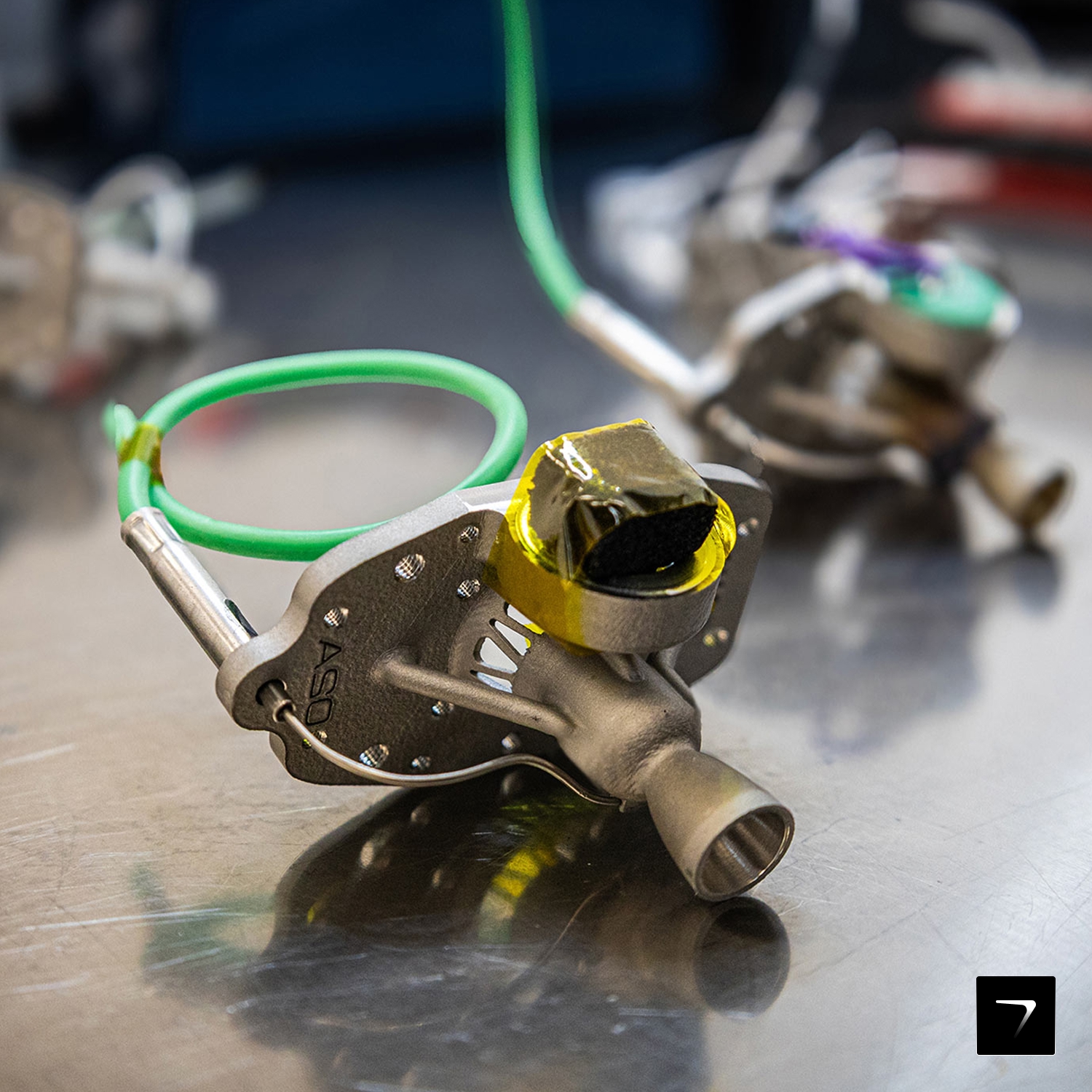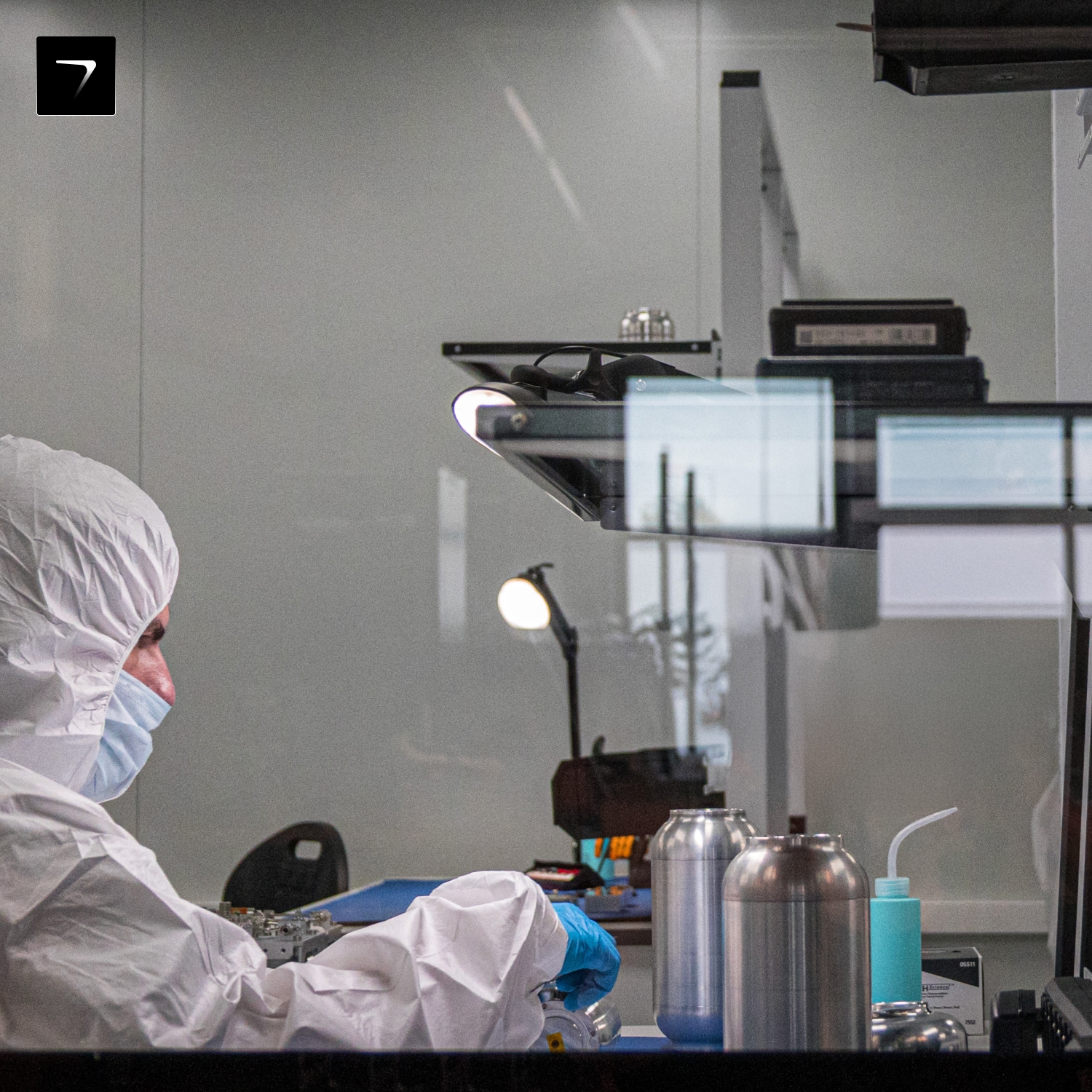


That naturally shaped the company around us. We were an engineering company focused first and foremost on getting the technology right.
Today, the question is no longer "can we make this work." It's "how far can we scale it."
That shift is at the heart of the new Liftero.
1,000 satellites with Liftero propulsion in orbit.
That is our north star.
Not because 1,000 is a nice round number, but because reaching that kind of scale would mean something much bigger: moving propulsion away from being a subsystem that is too often engineered almost from scratch for each spacecraft, and towards infrastructure that can be deployed repeatedly, reliably and at scale.
The market is moving in the same direction. More spacecraft are being built, but they are also being asked to do much more once they reach orbit: maneuver around other spacecraft, inspect and service them, deploy constellations, return payloads to Earth or safely remove themselves from orbit at the end of a mission.
These missions can look very different, but they share one basic need: they need to move.
Our ambition is to build the transport layer of the space economy — propulsion that can support a growing range of missions without forcing every customer to start from a blank sheet of paper.
That thinking has shaped how we build our products from the beginning, and it is now shaping how we build Liftero itself.
Propulsion without the usual compromise.
Space propulsion has traditionally forced customers into two uncomfortable choices. A standard catalog product may be faster to procure, but if it does not fit the mission, the spacecraft has to adapt around it — accepting compromises in performance, mass, layout, maneuver capability or operations, and spending additional engineering effort on integration.
The alternative is a custom propulsion system designed around the mission. That solves the fit problem, but often replaces it with another set of problems: longer development cycles, significant non-recurring engineering cost, additional qualification, more technical risk and a schedule that becomes tied to a one-off development program.
Liftero is built to sit between those extremes. We standardize the underlying propulsion architecture, while configuring the system around the mission. For the customer, that means getting much closer to the fit and flexibility of a custom system without taking on the cost, schedule and development risk that normally comes with one.
For us, the same model makes industrialization possible. By serving very different missions from a common foundation, we can manufacture repeatedly, shorten delivery times and grow output without scaling engineering effort one-for-one with every new customer. We believe that is what can enable both much broader adoption of propulsion and a propulsion company operating at a scale the segment has not seen before.
Our brand needed to catch up.
The previous Liftero brand was created when we were still proving our technology and building credibility. Since then, a lot has changed: our propulsion is operating in orbit, our customer base is growing, production is scaling, and we have become a publicly traded company. The company moved forward faster than the brand did.
Propulsion has always been at the center of Liftero. What changed is the scale of what we are building around it. The new identity reflects a more mature company, with a clearer proposition and much bigger ambitions. It is not a change in direction, but a clearer expression of where we are going.
Our north star gives us direction for the years ahead — toward more missions, more products, greater production capacity and a much larger role in how spacecraft move in orbit.
Standardized propulsion. Mission-configured. Built to scale.
The direction is clear. Now we execute.